
Turning Wine Merchandising Into a Visual Statement
Blending Security and Shelf Appeal
Your wine program isn’t just another category. It’s one of the few places in the store where presentation directly influences perception, purchase confidence, and margin.
And yet, many wine displays – whether wall sets, islands, or endcaps – are still treated like storage: rows of bottles, inconsistent layouts, and security measures that interrupt the shopping experience instead of supporting it.
The most effective retailers take a different approach. They treat the wine merchandising as a canvas where fixture design, layout, and protection work together to create a display that sells.
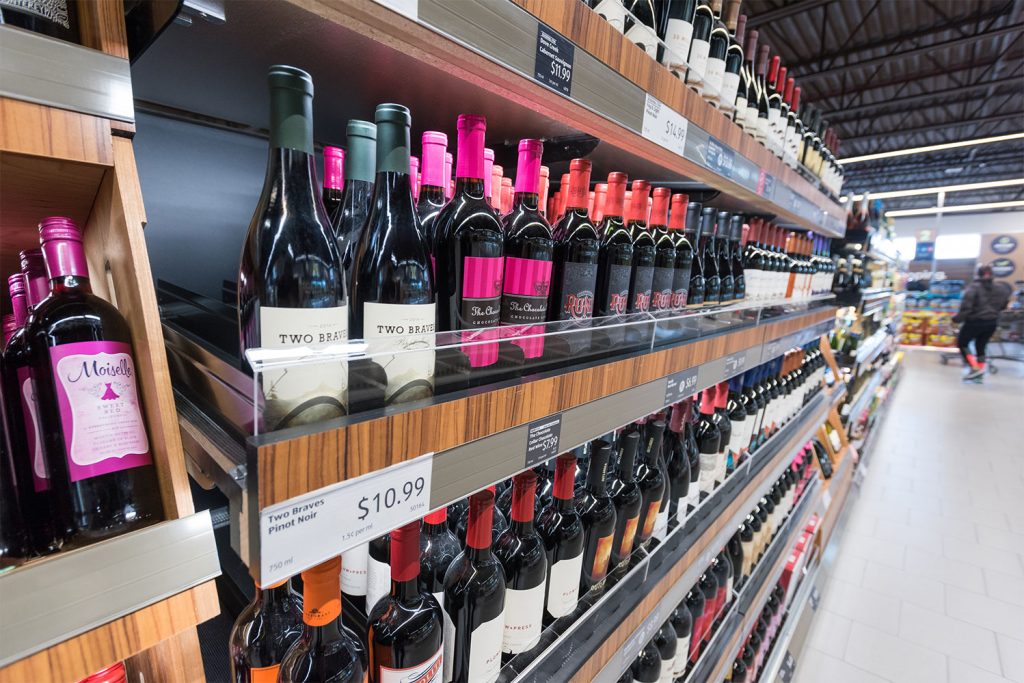
Great Wine Displays Do More Than Hold Bottles
Wine is a visual category. Shoppers don’t just look for a product – they look for cues:
- Organization
- Accessibility
- Quality
- Confidence in selection
When those signals are clear, customers are more willing to explore, trade up, and purchase with less hesitation. When they’re not, even a strong assortment can feel overwhelming or underwhelming.
That’s why the structure behind the display matters just as much as the product itself. A well-designed wine display creates clean, intentional sightlines, maintains alignment across different bottle types and pack styles, and supports consistent facings without constant resets.
In our wine program solutions, presentation isn’t decoration. It’s part of the selling strategy.
Security Should Support the Experience, Not Disrupt It
Wine presents a unique challenge. Higher price points make security necessary, but traditional approaches often come at a cost:
- Locked cases that interrupt browsing
- Bulky barriers that reduce visibility
- Inconsistent application across the set
The result is friction at the point where confidence matters most.
The better approach is integrated protection. When security is built into the fixture system, bottles remain fully visible, the layout stays clean and uninterrupted, and shoppers can engage with the product naturally. Protection becomes part of the design, not an obstacle to it.
This balance is what allows retailers to protect high-value inventory without compromising the shopping experience.

Fixed Shelving Can’t Keep Up with a Dynamic Category
Wine isn’t static. Assortments change. Bottle shapes vary. Promotions shift. Seasonal displays come and go. But many wine displays are still built around fixed layouts that don’t adapt well to those realities.
That rigidity leads to:
- Wasted space
- Inconsistent facings
- Displays that break down over time
Flexible systems change that equation. Adjustable shelving, modular bins, and reconfigurable layouts allow retailers to adapt to different bottle sizes and formats, expand or condense sections as needed, an maintain a consistent, organized presentation even as the assortment evolves.
The Best Wine Displays Are Built Around How People Shop
Most shoppers don’t approach wine with a fixed plan.
They browse. They compare. They look for signals that help them decide:
- Region
- Price tier
- Occasion
- Recommendations
Strong wine merchandising supports that behavior. It creates intuitive flow. It reduces friction. It makes it easier to move from browsing to choosing. That can mean:
- Clear segmentation within the display
- Consistent vertical or horizontal blocking
- Features that highlight premium or promotional items without disrupting the set
When fixtures are aligned with how customers shop, the entire experience becomes more natural — and more effective.
A WINE DISPLAY SHOULD ELEVATE THE ENTIRE STORE
At its best, wine merchandising becomes more than a category. It becomes a focal point.
A signal of quality. A reflection of the store’s standards. A place where customers feel confident spending more. That doesn’t happen by accident.
It’s the result of thoughtful design, flexible systems, and a clear understanding of how presentation, protection, and performance work together.
Because when wine displays are built the right way, they don’t just display products. They elevate them.